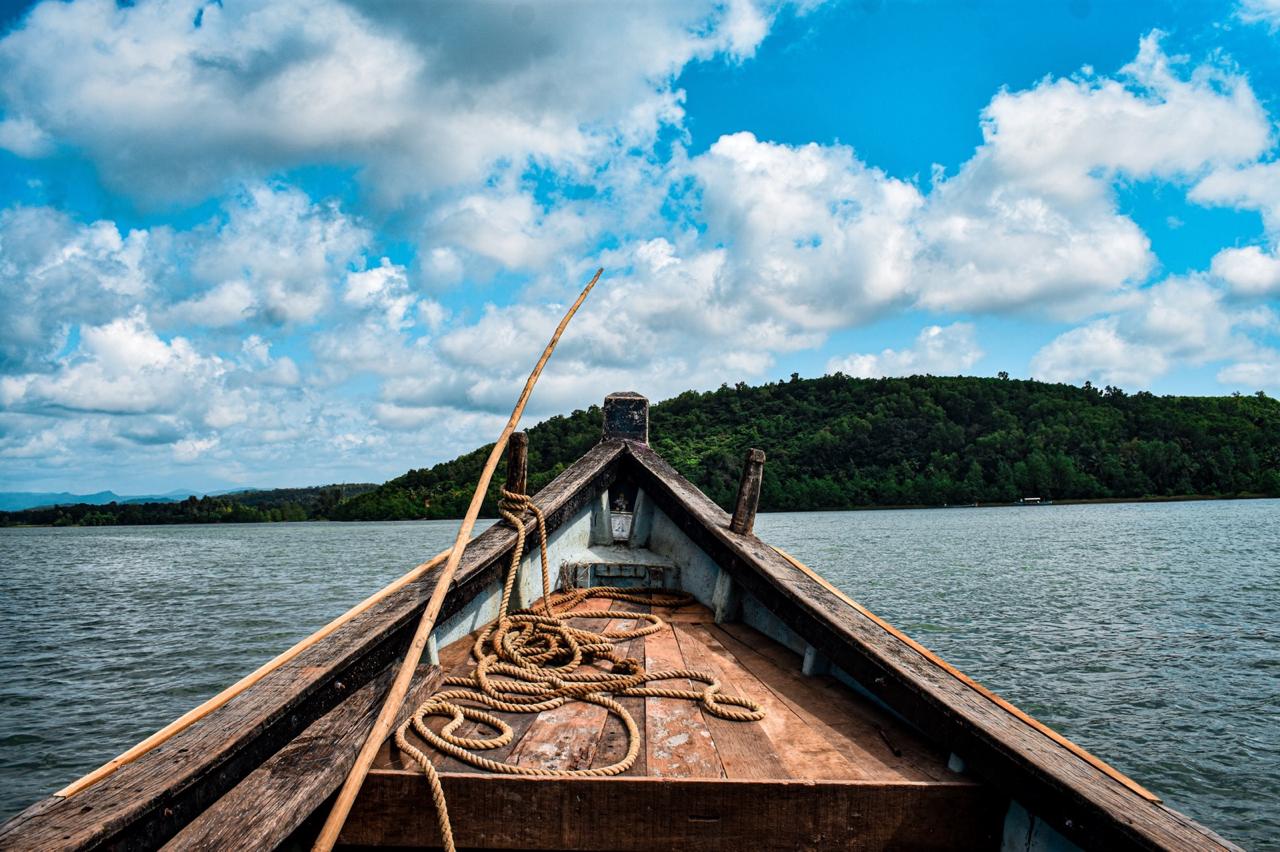
What are the Honnavar backwaters, exactly?
The "Honnavar backwaters" refers to the tidal estuary formed where the Sharavathi river, after its long run from the Western Ghats (including the Jog Falls drop), fans out into a network of channels before meeting the Arabian Sea. It's a mix of open river, narrow mangrove creeks, and sandbanks that shift with the tide — smaller and less commercialised than Kerala's backwaters, but with a similar sheltered, green, slow-water character.
Honnavar backwater boating covers two distinct experiences on this same estuary: the wider, easier Sharavathi Sunset Cruise on covered boats, and closer-in mangrove kayaking through the narrow channels a bigger boat can't enter. This guide focuses on the backwater ecosystem itself — what you'll actually see and how to time it well.
The mangrove ecosystem: what you'll see
The Sharavathi estuary supports a genuine mangrove forest — not vast, but dense enough to shelter a real range of birdlife and small estuarine creatures. As you move through the channels, expect the water to narrow and the mangrove roots to close in overhead in places, opening back out into wide sandbank flats near low tide.
- Birds: kingfishers (multiple species), egrets, herons, brahminy kites circling overhead, and migratory waders between November and February.
- River otters: occasionally spotted at dawn or dusk along quieter channel edges — not guaranteed, but a real possibility on a quiet paddle.
- Mudskippers and fiddler crabs: visible on the exposed mudflats and mangrove roots at low tide.
- Fishing boats: the estuary is still a working waterway — small local fishing boats are part of the scenery, not just tourism infrastructure.
Tide timing matters more than people realise
Because this is a tidal estuary, not a still lake, how much of the backwater you can access shifts through the day. At low tide, sandbanks and mudflats are exposed — great for photography and birdwatching, but some of the narrower mangrove channels used for kayaking can become too shallow to paddle. At high tide, the channels open up fully and boats can go further in, but the sandbanks disappear underwater.
Operators plan cruise and kayaking timings around this, so you generally don't need to think about it yourself — but if you're specifically chasing the exposed-sandbank look for photography, ask your operator whether your slot falls near low tide.
Honnavar backwaters vs. Kerala backwaters — how they compare
| Honnavar (Sharavathi) | Kerala (Alleppey/Kumarakom) | |
|---|---|---|
| Scale | Compact estuary, one main system | Vast interconnected canal network |
| Crowds | Low — rarely more than a few boats | Can be busy in peak season |
| Typical trip | 2-hour sunset cruise or kayak | Multi-day houseboat stays available |
| Character | Wilder, more mangrove-forest feel | More village and canal-life focused |
| Best for | A focused half-day nature experience | A longer, immersive backwater holiday |
They're not really substitutes for each other — Honnavar backwater boating is a compact, quiet, half-day nature experience, while Kerala's backwaters are built around longer, more immersive stays. If you're already on the Karnataka coast, though, Honnavar gives you a genuine taste of the same ecosystem without adding a separate trip.
Best routes for backwater boating in Honnavar
- Main estuary route (cruise boats): starts near the Honnavar jetty, moves through the wider mangrove-lined channel, and opens into the river mouth for sunset — the standard sunset cruise route.
- Inner mangrove channels (kayak only): narrower creeks branching off the main estuary, only accessible by kayak or small paddle craft, especially near mid-to-high tide.
- Sandbank loop (low tide, kayak): a shorter paddle that circles exposed sandbanks — best for photography and birdwatching, weather and tide permitting.
Want to experience the Sharavathi backwaters yourself? Choose between the sunset cruise and mangrove kayaking based on how active you want the trip to be.