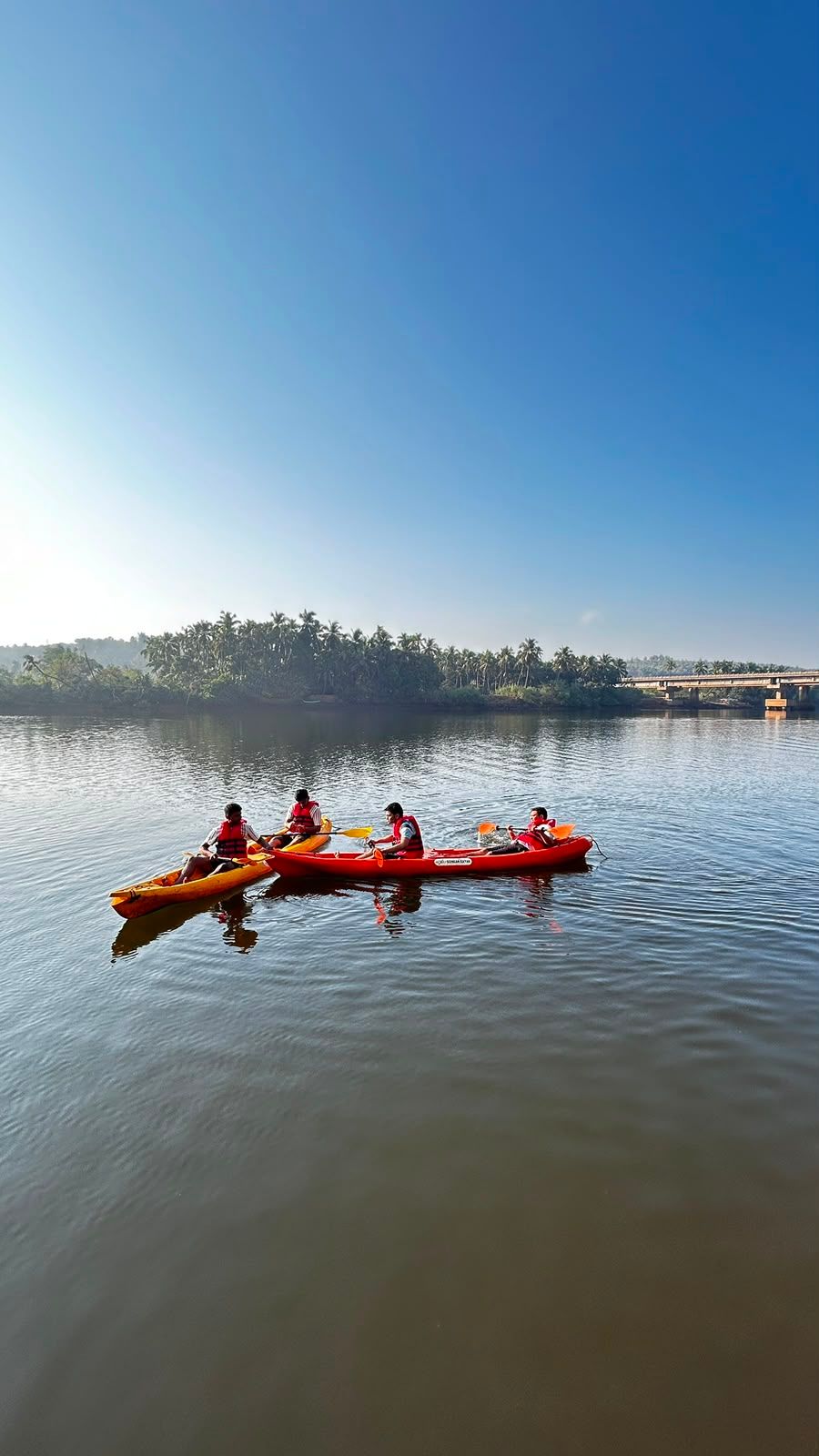
A short drive from Gokarna, the Aghanashini is one of the few undammed rivers on the Karnataka coast — its estuary near Kumta opens into a maze of mangrove channels that make for some of the calmest, most scenic kayaking in the region. No rapids, no experience needed, just quiet water, mangrove roots close enough to touch, and kingfishers overhead.
Quick Facts
- Distance from Gokarna: ~30-40 minutes by road to the Aghanashini estuary near Kumta
- Duration: 1.5-2.5 hours on the water, depending on the route
- Difficulty: Easy — calm tidal backwaters, no rapids
- Good for: First-time kayakers, families, birdwatchers, photographers
- Best time of day: Early morning or late afternoon, for calmer water and more birdlife
- Best season: October to March; avoid the monsoon (June-September) when the river runs high and fast
Why Aghanashini Is Different From Other Backwater Kayaking
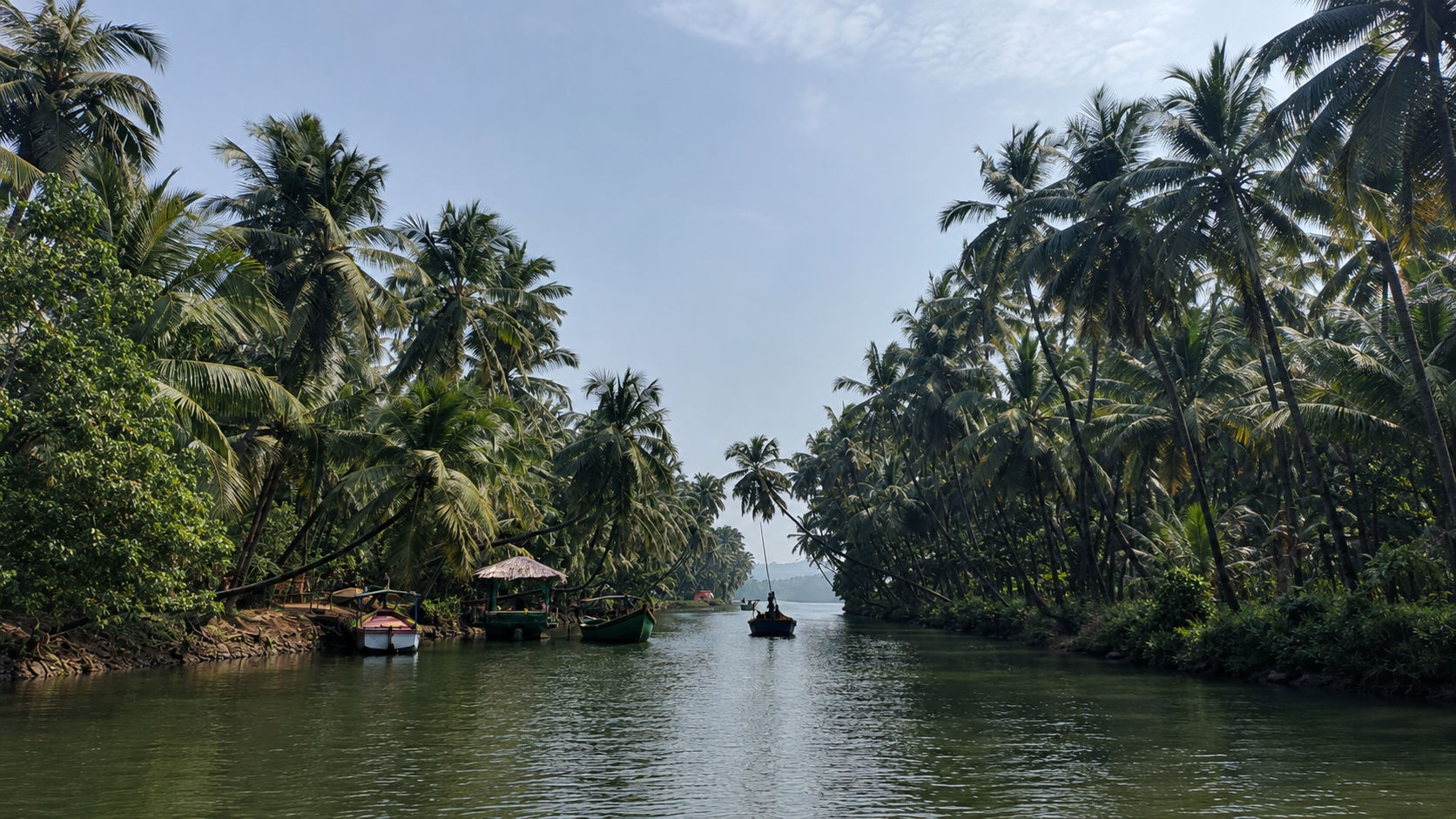
Most rivers on this coast have at least one dam upstream — the Aghanashini doesn't, which is a big part of why its estuary supports such dense, healthy mangrove forest. Paddling through the narrower channels near the estuary puts you inside the mangroves rather than just looking at them from a distance: expect close-up views of exposed root systems, fiddler crabs at low tide, and a noticeably higher density of herons, kingfishers and egrets than the more open backwater stretches near Honnavar.
What a Typical Trip Looks Like
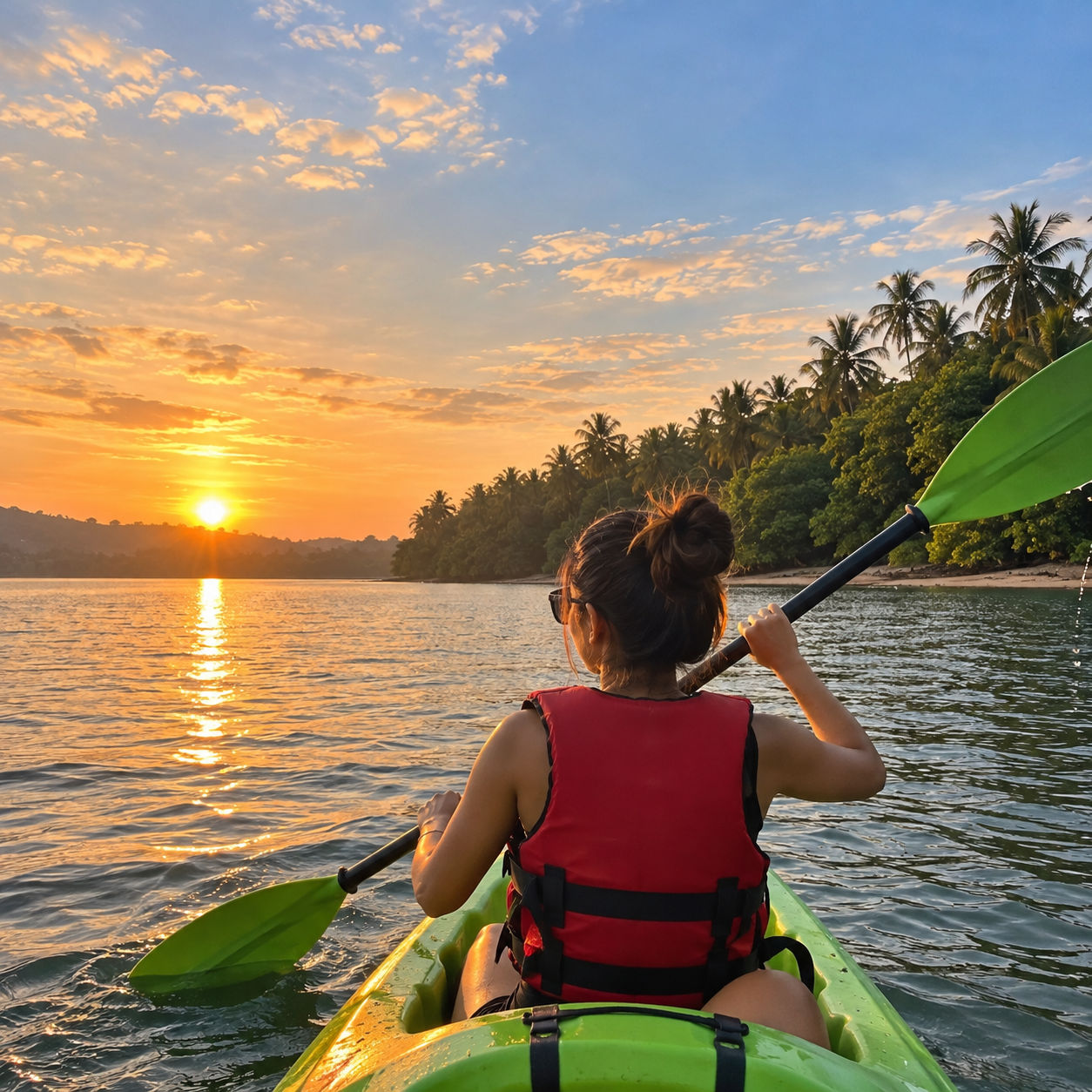
Trips start with a short briefing and fitting of a life jacket, followed by a guided paddle through a mix of open estuary and narrower mangrove channels. Guides typically point out bird species and good photo spots along the way, and the pace is slow enough that you don't need any prior kayaking experience — most of the effort is steering, not sprinting. Single and double (tandem) kayaks are usually both available, so it works whether you're going solo or with a partner, kid, or friend.
Aghanashini vs Honnavar Backwater Kayaking
| Route | Setting | Best for |
|---|---|---|
| Aghanashini (near Gokarna/Kumta) | Dense mangrove channels, undammed river | Birdwatching, close-up mangrove scenery, photography |
| Sharavathi backwaters (Honnavar) | Wider, open backwater with island views | Sunset paddles, longer open-water routes, combining with a boat cruise |
Based in Gokarna and want the wider backwater experience instead (or as well)? See our Honnavar boating guide — Honnavar is about 1.5-2 hours north of Gokarna.
What to Bring
- Quick-dry clothes and a change of clothes for after — you will get splashed
- Sunscreen, a cap, and sunglasses with a strap
- Water shoes or sandals that can get wet
- A waterproof phone pouch if you want photos — most guides allow a short stop for photos, but don't rely on it for extended shooting